Substrate / Technology
Latency is a design decision, not an accident.
Substrate is fast because every layer, from the silicon up, is built for one workload: serving models. Here is how a request becomes a response in under fifteen milliseconds.
Four steps, four milliseconds of overhead.
Land in the nearest region
An anycast edge accepts the request and routes it to the closest healthy region. No cold start, no DNS round-trip on the hot path.
Join a continuous batch
The request slots into an in-flight batch without waiting for it to fill. Throughput rises without adding to any single request's latency.
Run on compiled silicon
The model, compiled ahead of time to Substrate's accelerator, executes as a single fused kernel. No interpreter, no per-op dispatch.
Return the first token in ~11ms
Tokens stream back as they're produced. The meter starts and stops on tokens served. Nothing in between.
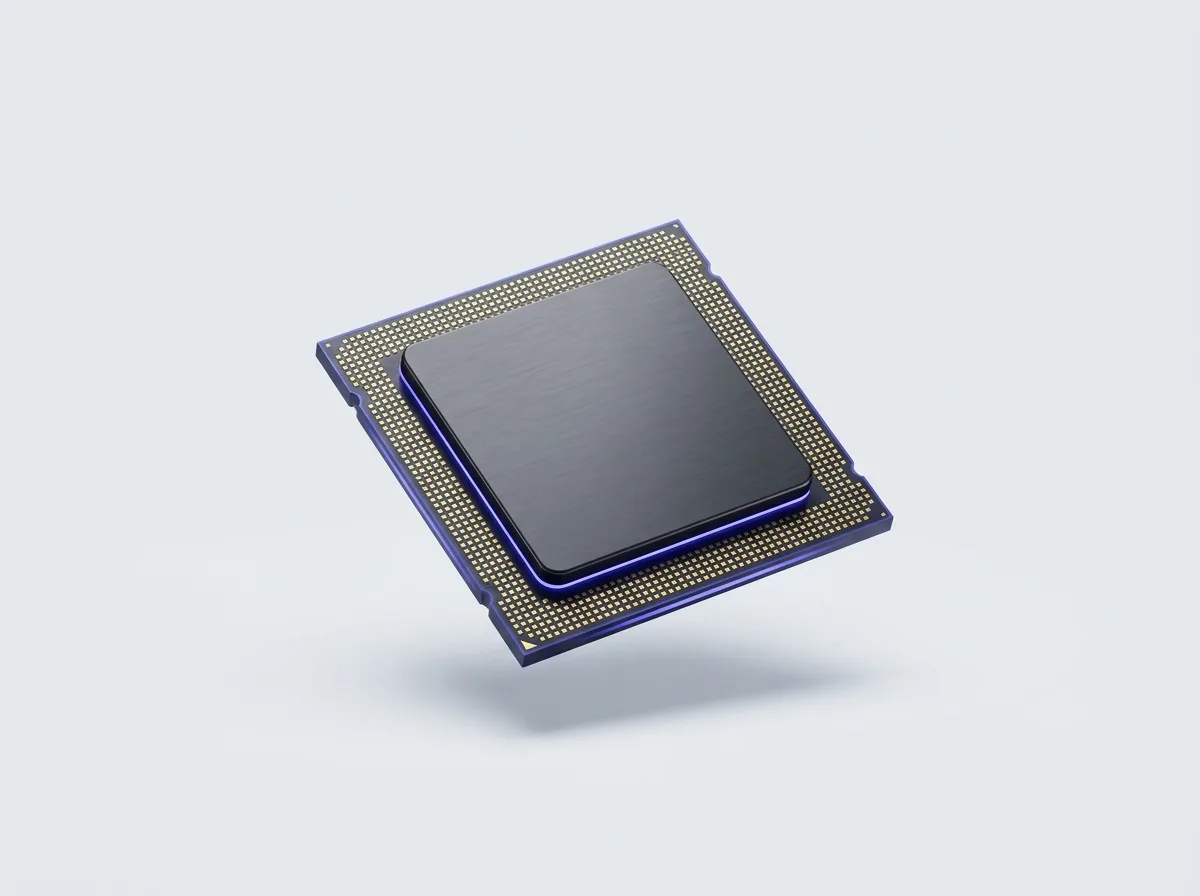
General-purpose hardware solves a harder problem than yours.
A GPU is a marvel of flexibility, and you pay for all of it. Substrate's accelerator does one thing: run inference. That focus is where the latency and the cost savings come from.
The numbers, without the asterisks.
Performance
| p99 latency | < 15 ms at sustained load (11 ms typical, first token) |
|---|---|
| Throughput | Up to 120k requests/sec per region, elastic |
| Cold start | None on the hot path, models kept resident |
| Batching | Continuous, request-level; no fixed batch window |
Platform
| Regions | 12, anycast-routed, automatic failover |
|---|---|
| Models | Open-weight, fine-tuned, and custom; hot-swappable |
| Interfaces | REST, gRPC, and OpenAI-compatible endpoints |
| Billing | Per token served; scale-to-zero between requests |
Security & compliance
| Certifications | SOC 2 Type II; HIPAA available |
|---|---|
| Isolation | Per-tenant compute and network isolation |
| Data | Prompts and weights never leave your boundary; zero retention by default |
| Uptime | 99.99% SLA, measured and published |
from substrate import Client

client = Client(api_key="sk-...")

# same call, routed to the nearest region
for token in client.stream(
    model="llama-3.1-70b",
    input=prompt,
):
    print(token, end="")

# first token in ~11ms · billed per token
Boring on purpose.
The best infrastructure is the kind you forget is there. Substrate's SDK is a thin wrapper over a stable HTTP API, drop-in compatible with the OpenAI client, so most teams migrate by changing one base URL.
Get an API keyRead the full architecture.
Request access and we'll share the deep-dive: the compiler, the batching scheduler, and the silicon.